In 1892 Espy Estrada is a poor half Portuguese girl in a small Maine town who dreams of doing more with her life than working in the cannery like the other poor Portuguese young ladies around her. A new job as a maid for a local teacher seems promising - especially when he offers to tutor her and help further her education for free.
Espy has all the male attention any girl could want - even that of local heir and pretty boy Warren Brentwood III who is recently back from college.
The two strike up a friendship, and, of course, any reader can see where this is going. Poor girl from the wrong side of the tracks - rich boy who gets whatever he wants...but of course the difference in their social classes keeps them from even seeing each other and from thinking the other would be interested in the least.
Her Good Name gets off to a very slow start. The entire first half of the book is basically back story. Girl and Boy knew each other as kids, they are now reacquainted but know nothing can come of their friendship because of social class. They are both placed on a church committee where they find ways to both linger together longer and avoid each other entirely.
Warren is being pursued by fellow upper-class girl, Christina. Espy seems to have a constant trail of love-sick boys after her. Neither likes the attention the other receives.
Then one day the teacher Espy works for makes a move on her - and his wife catches their embrace. Or, rather, his embrace, as Espy has somehow been completely unaware of the man's advances that even a child could have picked up on. Not wanting to admit to trying to kiss the maid, the husband says she made moves on him, Espy is fired and the entire town is abuzz because of it. This is where the book gets its name - her good name (which honestly wasn't "good" to start with since she was seen as just another Portuguese working girl) becomes sullied amidst the upper-crust. And for some reason love interest Warren believes the gossip.
The book actually gets slightly interesting when Espy moves to Bangor, Maine, to find more suitable work and to escape the undying gossip around town. Months later she is shocked to see Warren there as well - it seems he's left his father's lumber business in order to study theology and become a minister. The two spend a lot of time together where they fall in love without admitting it to each other.
Warren returns home for a short time and is invited by their hometown pastor to preach. He writes Espy and says he needs her there for moral support. Having not returned home since leaving her sullied reputation behind, Espy is hesitant, but goes for Warren's sake. There he parades her in front of his disapproving parents and their friends, making her further realize she is not a part of his social standing and never will be.
Her Good Name is a very predictable fiction novel. It might be good as a beach read - or, as I read it, something to pass the time while ignoring one's three children and it didn't much matter if I was interrupted over and over.
I found Espy and Warren hard to cheer for. Both had the "woe is me and my lot in life" attitude, though they enjoyed doing charitable work. And I realize I wasn't around 120 years ago, but I seriously doubt the misdeeds - true or false - of a poor immigrant's daughter would warrant the tongue wagging Espy received from the town's elite. And her reaction to run away didn't endear me to her at all. I felt she needed to stand up for herself - make her story known and believed, especially to the man she was actually falling for.
I would give this novel 2.5 stars out of 5. Readable, but hardly enticing.
Thursday, February 21, 2013
Wednesday, February 6, 2013
Courting Morrow Little by Laura Frantz
Every now and then you read a book that stays with you after you finish the last page. This is one of those books. Courting Morrow Little by Laura Frantz is the story of Morrow, a young woman from the wilds of Kentucky in the times of the American Revolution. After two years in Boston with an aunt, she returns to her father and the home where her mother and sister were killed and her older brother was whisked away by Native Indians.
As a returning single woman, many men set eyes upon her - from ragtag soldiers and frontiersmen to those in power. One set of eyes belong to a young half-blood who is the son of a Shawnee man her father has befriended.
In time, Morrow goes from feeling disdain to friendliness toward the men who stop at her home without warning or invitation. And eventually she realizes she is in love with Red Shirt - the Shawnee half-blood.
Many troubles ensue for Morrow and Red Shirt - running from the law of the land, illness, many separations and more. That would be my chief complaint with this novel - our heroine and hero don't spent nearly enough time together.
But overall Ms. Frantz spins a wonderful tale full of picturesque scenery and details, but not so much that you lose the story. Courting Morrow Little does have Christian undertones, but I think it would be enjoyed by anyone who loves to read romance novels with a memorable story line behind it.
Overall, I would give this book 4.5 out of 5 stars. A must-read of anyone who loves a great love story.
Thursday, March 15, 2012
Things Were Better Before You Came
This is a strange title for an adoption-related book, but author Doug Walker did a great job with the title.
Things Were Better Before You Came is a true story about Walker's life, his adoption, his immense fear of rejection and discovering that God will never reject you.
I have to tell you - I have page after page of this book underlined. I related so well to each word he wrote.
As an adoptive mother, I saw my son in Walker's own self, and myself in the role of his mother. The main point I got: They did not speak the same language (figuratively) and had a hard time communicating with each other. I think my son and I are much the same and we, like Walker and his mother, show our love in different ways and it at times frustrated the other when we don't "get it."
I also saw much of myself in Doug Walker as well. He explains that he felt rejected by his adoptive mother after a callous, emotion-filled (and untrue) statement she uttered when he was a child. And as someone who does not know half of my biology, I can relate to that feeling of rejection. As he explains, it's not something you walk around with consciously. It's completely unconscious, it's buried and unrealized, but still there.
In the book, Walker explains that three single moments in his formative years led him on a path of feeling rejected - a comment from his mother at the age of 9, his mother's willingness to help him search for his birth parents at the age of 12 (he explains that he wanted his mother to be jealous and only want him for himself), and asking his mother if she loved him unconditionally (to which she responded as any mother would - "What did you do?").
Now - Walker is quick to point out that his mother always loved him and he never doubted that, but in his own mind her reactions were not what he wanted and therefore meant that she rejected him. He also says that their relationship is much better now and is healing...his mother had no recollection of even saying these things to him. It just goes to show that trivial things to us might be life-altering for others.
I did want to point out a few lines in the book that really spoke to me. Lest you think this book is only worth reading if you are adopted or an adoptive parents, let me assure you, anyone can benefit from this book. The rejection Doug Walker felt from his mother is something we all face at times in our life.
Early in the book he says, "My existence, I believed, would only be validated by my performance." I think we all feel that way at some time or another. We all feel the need to prove ourselves. And that's really what the book is about. Learning that you ARE loved. Learning that no matter what, God loves you and Jesus died for you even though you were not worthy - and that no matter what you face in life, God is always there, always present, never rejecting.
He also says he came to this realization, "At that moment I realized her love for me is based on one simple truth: I am her son.Her jealously for me was not fueled by the knowledge that I have planted a successful church, that I have never been arrested, or that I have given her three grandchildren. She adopted me when I was a baby, and she continues to adopt me today. In the darkest moments of our relationship, this has always been true, even when I didn't feel it."
For me - this statement sums it up. As an adoptive mother, I don't love my child for the things he does or does not do. No, even as a preschooler, his choices don't always make me happy, and no, we do not see eye to eye on a lot of things and we likely will butt heads over many things for many years. But he is my son. I chose him. I love him and I adopt him daily as my son.
And God adopts us daily in spite of butting heads and arguing with him over things.
Things Were Better Before You Came is an amazing story of love, adoption, redemption, and unconditional love. I highly recommend it for all parents, all children, adoptive families and Christian families.
As of March 15, 2012, this book is $7.99 for Kindle.
AdoptionAcceptance&UnconditionalLove from Foothills Community Church on Vimeo.
Things Were Better Before You Came is a true story about Walker's life, his adoption, his immense fear of rejection and discovering that God will never reject you.
I have to tell you - I have page after page of this book underlined. I related so well to each word he wrote.
As an adoptive mother, I saw my son in Walker's own self, and myself in the role of his mother. The main point I got: They did not speak the same language (figuratively) and had a hard time communicating with each other. I think my son and I are much the same and we, like Walker and his mother, show our love in different ways and it at times frustrated the other when we don't "get it."
I also saw much of myself in Doug Walker as well. He explains that he felt rejected by his adoptive mother after a callous, emotion-filled (and untrue) statement she uttered when he was a child. And as someone who does not know half of my biology, I can relate to that feeling of rejection. As he explains, it's not something you walk around with consciously. It's completely unconscious, it's buried and unrealized, but still there.
In the book, Walker explains that three single moments in his formative years led him on a path of feeling rejected - a comment from his mother at the age of 9, his mother's willingness to help him search for his birth parents at the age of 12 (he explains that he wanted his mother to be jealous and only want him for himself), and asking his mother if she loved him unconditionally (to which she responded as any mother would - "What did you do?").
Now - Walker is quick to point out that his mother always loved him and he never doubted that, but in his own mind her reactions were not what he wanted and therefore meant that she rejected him. He also says that their relationship is much better now and is healing...his mother had no recollection of even saying these things to him. It just goes to show that trivial things to us might be life-altering for others.
I did want to point out a few lines in the book that really spoke to me. Lest you think this book is only worth reading if you are adopted or an adoptive parents, let me assure you, anyone can benefit from this book. The rejection Doug Walker felt from his mother is something we all face at times in our life.
Early in the book he says, "My existence, I believed, would only be validated by my performance." I think we all feel that way at some time or another. We all feel the need to prove ourselves. And that's really what the book is about. Learning that you ARE loved. Learning that no matter what, God loves you and Jesus died for you even though you were not worthy - and that no matter what you face in life, God is always there, always present, never rejecting.
He also says he came to this realization, "At that moment I realized her love for me is based on one simple truth: I am her son.Her jealously for me was not fueled by the knowledge that I have planted a successful church, that I have never been arrested, or that I have given her three grandchildren. She adopted me when I was a baby, and she continues to adopt me today. In the darkest moments of our relationship, this has always been true, even when I didn't feel it."
For me - this statement sums it up. As an adoptive mother, I don't love my child for the things he does or does not do. No, even as a preschooler, his choices don't always make me happy, and no, we do not see eye to eye on a lot of things and we likely will butt heads over many things for many years. But he is my son. I chose him. I love him and I adopt him daily as my son.
And God adopts us daily in spite of butting heads and arguing with him over things.
Things Were Better Before You Came is an amazing story of love, adoption, redemption, and unconditional love. I highly recommend it for all parents, all children, adoptive families and Christian families.
As of March 15, 2012, this book is $7.99 for Kindle.
****************
Doug Walker visited my home church in March 2012 where he preached an amazing sermon on adoption and shared his own birth mother's story. He also shared how he and his wife have three sons - two are biological and one is adopted. While at our church he was selling copies of his book, which I promptly bought. I will tell you that this book had deeply affected me as a mother and as someone who understands underlying rejection issues. I want to thank Mr. Walker for sharing his story both from the stage and in his book.
Here is his sermon from his visit to our church:
AdoptionAcceptance&UnconditionalLove from Foothills Community Church on Vimeo.
Saturday, February 25, 2012
All The Flowers in Shanghai by D. Jepson
Duncan Jepson brings us a haunting novel, All the Flowers in Shanghai about a young girl, Feng, in pre-Revolution China. Told solely in the first person, we learn immediately that Feng is writing to a daughter that she had claimed was stillborn but was apparently still alive and was now telling her the story of her life.
Feng was the second daughter. The "spare" to her parents, who are only called Ma and Ba. She has an older sister, only called Sister, who is being groomed to marry a man of a higher status and has been treated like a princess her entire life. Xaio Feng dresses like a peasant and spends her time roaming the gardens with her grandfather and knowing nothing of life aside from the Latin names of flowers.
As her sister is preparing to marry the rich Sang heir, Feng meets a village boy and falls immediately in like with him. They spend a lot of time together, but when Sister is suddenly unable to marry, it is up to Feng to fulfill the contract made with the Sang family.
But Feng was never groomed for any of it - she knew nothing of the ancient traditions and ceremonies involved in a wedding or marriage. She insults her new in-laws immediately, but doesn't seem to care because they took her away from the life she had known and enjoyed. And when her new husband clumsily forces himself on her, Feng turns bitter and angry.
Her mother-in-law's insistence for a male heir angers Feng, so when she does become pregnant she manages to detach herself from her developing baby and makes her maid swear to give the child away if it is a girl. Of course, the entire novel is a story she has written for a child she never knew, so when a girl is born, the reader is not surprised. Her maid takes the baby and gives it away to an older couple and Feng tells the family she had birthed a stillborn son.
The story continues from there - covering more than 30 years time in all and goes into the beginning of communist China where Feng makes some drastic and unforeseen changes in her life.
In the end, I did not feel connected to any of the characters in this book, except maybe the given-away daughter since the letter was to her. Feng goes from a sweet, unassuming innocent to a cold-hearted, angry and bitter woman. Feng's family simply abandons her without and any life lessons (though I'm assuming that's just how things were in depression-era China). Her husband I can only assume is a fool and simply does what he is told by his father, mother and then wife.
I also felt like Feng spent much of the book searching for a true parent figure. Her mother treated her cruelly, using her children only as pawns to move up in station. For many years Feng looked to her older maid as a mother figure, then sought out another mother-figure after that. It seems that Jepson gave Feng many women who could fill the role, but none who could fill the pain Feng felt.
Overall, I give All the Flowers in Shanghai 3.5 out of 5 stars. It was fairly easy to read, but some of the material was tough and at times the language more crass than I'm used to, but it certainly fit with the storyline.
Tuesday, February 14, 2012
A Sense of Duty by Lisa Shea
I got A Sense of Duty as a free download for my Kindle and I have to admit to being intrigued from the beginning! I adore all things medieval, so I really hoped this book would live up to my expectations and it sure did.
It begins with a prologue outlining the unspoken love between Constance, the daughter of an English Lord, and Gabriel, her personal guard who had fought in the crusades. It's hard to believe that not even a chaste kiss has crossed between them, but they stand motionless for what seems like hours on the beach, Gabriel's arms protectively around Constance.
But sadly, Constance has been pledged in marriage ten years prior to a much older Lord Barnard and the time for their hand-fasting has come. And as much as she loves Gabriel, she needs to marry Barnard to ensure his protection over her parent's lands.
She tells Gabriel that their time together had been "amusing," crushing his heart, and she marries the older man.
Six years pass and Constance feels like a prisoner in her own home. With two stillbirths behind her and no living children, her husband has decided to see if any of the local women or maids can produce a child for him. Constance is scorned, hurt, but glad that the older man leaves her alone. She wistfully thinks of Gabriel. And she passes the time she works with an older man named Ralph who teaches her to wield a sword and dagger as protection against local bandits.
On a trip to see her elderly Aunt Silvia at a nunnery, her guards are killed and Constance is taken captive. She is locked away, though not broken. Constance knows that they have demanded ransom, but doesn't understand why her husband has not paid it. Perhaps her brother might. When she is saved by mercenaries known as the Angelus, Constance's curiosity is piqued, but she's too grateful to worry about it. She is returned to her brother's home to recuperate against her husband's wishes.
As she regains her strength, Constance realizes that her beloved Gabriel is closer than she thought - he is a neighbor of her brother! Gabriel is in her childhood home once again, but this time flirting with the younger sister of Constance's sister-in-law. She does her best to ignore him, choosing instead to play with her young nieces and nephews - relishing in the ability to be with children. As time passes, her sister-in-law, Alison, realizes that Constance is not as she imagined and apologizes profusely for not visiting and for leaving Constance without the affections of her own family. However, Constance's jealous husband wants her to have nothing to do with her brother, his family, or the tall, handsome man who keeps stealing glances at his wife.
Through a harrowing series of events, Constance and Gabriel finally admit their love for one another, as expected, and Barnard flies into a rage. It is revealed that Gabriel is at the head of the mercenaries called the Angelus and Constance figures our that Barnard himself is at the helm of the bandits who have been robbing people and leaving them for dead the last several years.
When Gabriel is sentenced to hang - along with his men - and Constance is forced to return to her husband's keep, will they be able to unveil Barnard's deception and save the men of the Angelus?
Of course - the answer should be obvious!
A Sense of Duty is full of twists and turns - some expected, many not. There is just too much to try to cover in a quick book review! But if you like romance (not steamy stuff, but stories of finding your true love) and you like Medieval or Regency novels, I really think you will enjoy this one. I could barely put it down! I give Lisa Shea's book 4.5 out of 5 stars!
(PS - it is still free as of 2/14/12! Get it now!)
Monday, February 6, 2012
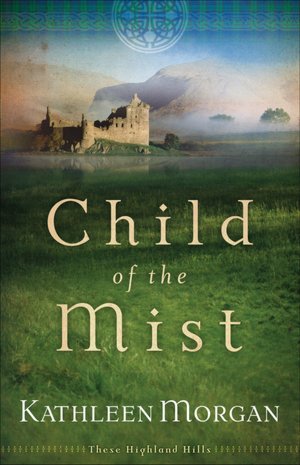
Kathleen Morgan is quickly becoming one of my favorite authors and Child of the Mist certainly doesn't disappoint.
Set in the 16th century Scotland Highlands, the story opens with a grim scene. That of Naill Campbell watching helplessly as his beloved wife and child die in childbirth. We later learn that it had been their fourth stillborn child.
Then the tale jumps a year to the life of beautiful MacGregor clan heir Anne MacGregor who is known throughout her lands as a healer - though some call her a witch because of her Old Ways of healing.
One evening she is sent to the home of a peasant couple having their first child. While she is attending to the laboring mother, cattle thieves raid the town - men from the hated Campbell clan. When one sees her breath life in to the still young babe, he calls her a witch and wants to kill her. She stands her ground and is then released by a kind - yet still hated - Campbell warrior.
Soon the same Campbell man who saved her life - who also happens to be the Campbell clan heir - is captured by the MacGregors. Anne tells her father that the man saved her life and she was honor bound to save his in return. So instead of killing the man, the MacGregor chieftain gives him his daughter - Anne - in an effort to end their decades-long feuding.
Anne and the Campbell heir, who of course of Naill from the first scene, are handfasted. Meaning they are like-married for a year and a day. After that time they may either have a real marriage or they may go their separate ways. Anne doesn't want to be married - let alone to a thieving, murdering man like Naill Campbell (who is called the Wolf). And Naill had only lost his beloved wife a year before and is not ready to commit to another, let alone love her, at all.
Naill and Anne set forth for Campbell land where they face many challenges. One being Naill's handsome cousin Iain, who fancies himself in love with Anne and thinks his cousin is a rake and will treat her poorly. The second - and biggest problem - is that someone on the inside of the Campbell clan has betrayed Naill and wants to see him dead.
Who is the traitor? Naill suspects many. His cousin Iain tops his list because of his affections for his psuedo-bride and Naill is jealous. But his Uncle Duncan would be second in line behind Naill himself for the title of Chieftain. Hugh, a cousin, is also in the heir line-up, as is another cousin, Malcolm. Any one could be working against Naill and trying to claim the Chieftainship for himself.
Of course, many problems arise for our young couple. At first they hate each other. Then of course, they fall in love but their own stubborn prides get in the way and despite loving each other, they do not trust each other. Thrown in the fact that many townspeople, Naill's family included, call Anne a witch, and it's a recipe for a disastrous relationship except for the love the couple have for each other even though they refuse to admit it or do anything about it.
In the end, what will happen? Will Naill discover who the traitor is before he loses not only his life and title, but the woman he has grown to love? Will Anne's homeopathic healing abilities get her arrested for being a witch? And of course, will love prevail and the couple wind up together or will the traitor, Iain's affections and the couple's own differences come between them?
Child of the Mist is a very quick-paced book and a fairly easy read. I thoroughly enjoyed it and look forward to reading more of her series called These Highland Hills. She also as a series called the Brides of Culdee Creek, of which I have read Book 1 and loved.
I give Child of the Mist 4 out of 5 stars and highly recommend the author to anyone who likes romance without the smut. Right now it's FREE for the Kindle (as of 2/6/12), so scoop it up and read it!
Friday, January 13, 2012
Belle by C. Dokey, adaptation of Beauty and the Beast
Cameron Dokey brings us a short, young adult book simply titled Belle.
This was a very quick read and while it wasn't exactly "my style" I thought it very well written, I enjoyed their adaptation of the Beauty and the Beast story and I thought this would make a great beach or vacation read.
Belle is the youngest of three sisters who she defines as possessing true "Beauty." Belle believes she has beauty, but not capital-B Beauty like Celeste and April. The defining moment of her childhood is when the family first meets their benefactor and father's business partner Alphonse LeGrand and Belle finds herself, for the first time ever, standing between her sisters. For some reason neither her parents nor Monsieur LeGrand can see her and Belle assumes it is because her sister's Beauty completely enveloped her and her non-Beauty.
Through a series of events, Belle's father encounters the Beast and the fabled Heartwood Tree. The Heartwood Tree story was one of true love, with the wife of a young couple dying and the husband planting a tree over her heart. The white and red petals bloomed year round and never faded. It was legend that nobody was allowed to cut from the tree, but when the right person came the tree would willingly give up a branch for that person.
Naturally, the father finds the Heartwood and the tree gives up a branch to him. The Beast then finds him and demands that the man, known for his woodcarving skills, work the wood so it tells its story. The father says that only his daughter Belle would be able to work the wood. What father does that? But that's the story, so we'll go with it.
Belle returns to find the story inside the Heartwood branch, but can not come up with anything. She lives with the Beast for weeks where he continually asks her to look into his face till the count of five, but each time she can not do it.
Finally he tells him she is homesick and wants to go home. He allows her to leave, but in a conversation with Monsieur LeGrand Belle realizes she might love the beast-like man. She rushes back to him, hoping to find him in time.
Belle is part of a series of adaptations of fairy tale stories. There are also books retelling the stories of Cinderella, Mulan, Arabian Nights, Rapunzel and Snow White.
I give this book 4 out of 5 stars because I thoroughly enjoyed the story and Dokey's quick pace. A perfect summer (or snowed in!) read.
Subscribe to:
Posts (Atom)